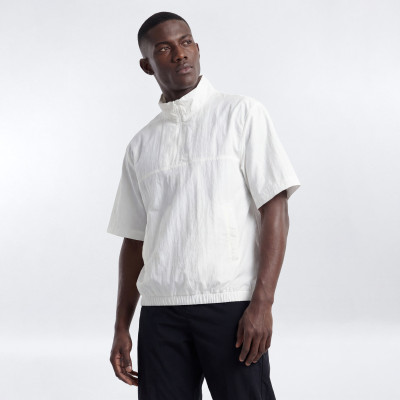
2026 Q2 Cross-Border Streetwear Market Trends and Procurement Strategies Report
I. Overall Market Overview for This Quarter
The global streetwear market continued its steady growth this quarter, with Generation Z and young consumers remaining the core consumers. Personalization, scenario-based shopping, and high cost-performance were the three key consumer keywords. Offline store traffic in Europe, America, and Southeast Asia rebounded, while online DTC independent websites and social e-commerce orders continued to rise. The global apparel sourcing landscape further diverged, with the "China R&D + Vietnam mass production" model being adopted by more overseas brands, and the proportion of sourcing from a single country of origin continuing to decline.
In terms of product categories, orders for loose-fitting casual tops, distressed jeans, printed trendy items, and embroidered workwear styles saw significant increases; basic, versatile styles maintained stable sales volume, while creative design styles and limited-edition small-batch items demonstrated strong pricing power.
II. Trend Analysis: Styles, Techniques, and Fabrics
1. Style and Design
Demand for vintage techniques such as water washing and distressing, stone polishing, cat whiskers, and partial rips has increased significantly; digital printing, 3D embroidery, hot stamping, and partial offset printing have become the core means of differentiating styles.
Overseas customers have higher requirements for process fineness, stitch uniformity, and non-deformation after washing, and simple OEM is gradually turning to refined customized processing.
3. Fabric Selection
Breathable cotton, heavyweight denim, and washed knitwear remain the main fabrics; orders for environmentally friendly recycled fabrics and antibacterial functional fabrics are steadily increasing, and overseas brands are paying more and more attention to green production standards. Lightweight textured fabrics are suitable for spring and summer main styles, while thick and durable fabrics are used for workwear and retro series. Fabric matching pays more attention to wearing comfort and seasonal adaptability.
III. Cross-border Procurement and Supply Chain Dynamics
1. Origin Selection: Complementary Model Becomes Mainstream
With its complete industrial chain, strong R&D and prototyping capabilities, and ability to undertake complex processes, China has become the preferred destination for overseas brands to develop new products, customize high-end products, and handle small-batch fast orders. It is particularly adept at high-tech embroidery, complex printing, and custom-made special patterns.
Vietnam leverages its advantages in labor costs and tariffs to focus on producing large quantities of standardized items such as knitwear, basic T-shirts, and regular jeans.
Industry Status Quo: Most medium and large-sized overseas streetwear brands have adopted a dual-location collaborative layout, splitting product categories to allocate orders, and taking into account cost, quality and supply chain risks.
2. Changes in order characteristics
Orders are trending towards smaller batches, more frequent deliveries, and faster turnaround times, with a decrease in traditional large-volume, long-term orders. Brands are increasingly favoring phased releases and limited-edition launches.
MOQ (Minimum Order Quantity) flexibility has become a core consideration in procurement, with overseas startups and niche streetwear brands generally preferring low MOQ collaboration models.
Clients are increasingly demanding upfront services: shifting from simple garment procurement to integrated ODM services encompassing pattern customization, graphic design, and co-creation of styles.
3. Logistics and Delivery
Global logistics delivery times remained generally stable, with minimal fluctuations in sea and air freight rates. Cross-border customers increasingly valued real-time logistics tracking, rapid handling of anomalies, and on-time delivery. The efficiency of cross-regional raw material flow continued to impact delivery times for some Southeast Asian factories, highlighting the significant advantage of integrated domestic supply chains in delivery stability.
IV. Brand Operation and Consumer Insights
Community and content marketing become standard practice: Overseas streetwear brands are no longer reliant on traditional advertising, but instead focus on sharing outfits on social media platforms, user-generated content, and cultivating niche communities to increase repeat purchases.
Limited-release models become commonplace: Limited-time releases and small-scale limited-edition items effectively increase product value and reduce inventory pressure, becoming a common operational method for streetwear brands.
Green and transparent production gains attention: More and more overseas consumers are paying attention to the production process and the environmental friendliness of fabrics, and brands are prioritizing partner factories with compliant production and environmentally friendly processes.