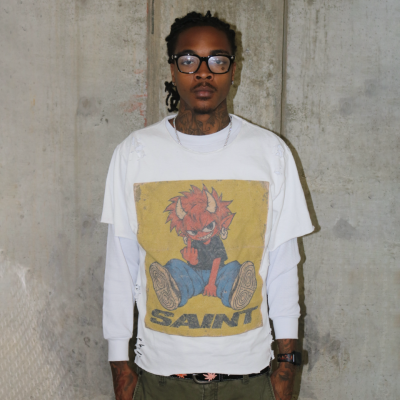
Fashion Industry News | Two Major Trends in Streetwear: Collaborations Moving Towards Deeper Integration of Craftsmanship, Small-Batch Rapid Production Becoming Standard
As the peak fall sales season of 2026 approaches, the streetwear market is undergoing a quiet but profound transformation. Competition between brands is no longer just about who has the bigger logo or the hotter celebrity, but has fallen to more tangible levels—whether craftsmanship can keep up and how quickly they can react. This news update focuses on two rapidly emerging industry trends.
Trend 1: Collaboration is moving from "labeling" to "deep integration of craftsmanship"
Looking back at brand collaborations from a few years ago, most remained superficial, with consumers primarily buying the name itself rather than the logo. However, collaborations in 2026 are clearly different.
The Simone Rocha x adidas Originals 2026 Fall/Winter collection, released this week, is a prime example. Irish designer Simone Rocha didn't simply print his name on the Trefoil logo; instead, he truly infused the brand's signature feminine details—lace, bows, and softened cuts—into the structure of adidas sportswear and footwear. The Denim Tears x Billionaire Boys Club collection, also released this week, utilizes multiple techniques, including full-zip knit cardigans, red headscarf prints, and PrimaLoft thermal padding, with one jacket potentially featuring three to four different treatments.
The logic behind this is clear: consumers' aesthetic standards for collaborations are rising, and simply layering logos is no longer enough to create surprises. Brands are beginning to treat collaborations as "craftsmanship experiments," using complex combinations of fabrics and techniques to generate buzz and premium pricing.
This presents a direct challenge to apparel manufacturers. In the past, a factory might have specialized in printing or embroidery, but now a collaborative item often involves two or three of these processes simultaneously: printing, embroidery, special washing techniques, and fabric splicing. Outsourcing any one of these steps can impact quality and delivery time. The comprehensive craftsmanship capabilities of in-house workshops are becoming a core requirement for securing collaborative orders.
Trend 2: Small-batch, rapid response becomes a core demand for brands.
The second trend is directly related to production pace.
The "weekly drop" model of leading streetwear brands like Supreme and Palace has been in operation for many years, but the change in 2026 is that this small-batch, rapid restocking approach is spreading from top brands to smaller streetwear brands. More and more independent designer brands and startups are no longer aiming for orders of thousands of pieces at a time, but instead producing 50 to 100 pieces first to test the waters, quickly restocking if sales are good.
There are two driving reasons for this change: first, inventory pressure, with brands unwilling to bear the risk of large-scale stockpiling; second, in the social media era, the lifespan of trending products is very short, and by the time mass production is complete, the hype may have already faded. "Speed" itself is a competitive advantage.
On the production side, this means that a minimum order of 50 pieces, 7-day sampling, and 20 to 25-day delivery for bulk orders are transforming from a "bonus" for a few factories into an "entry ticket" for the entire industry. Factories that can only accept large orders, have long production cycles, and are slow to respond will find it increasingly difficult to secure orders from trendy brand clients.
Implications for newly established small and medium-sized apparel brands
These two trends combined present both challenges and opportunities for fledgling small and medium-sized apparel brands.
The opportunity lies in the decreasing barriers to entry. Previously, starting an apparel brand often required orders of thousands of pieces, resulting in significant financial pressure and high costs of trial and error. Now, small-batch, rapid-response production has become the industry standard, with orders starting at just 50 pieces. This means new brands can validate the market at a much lower cost: test one or two designs in small batches, observe market feedback, and then decide whether to reorder, allowing them to focus their limited funds on truly marketable styles rather than letting them stagnate in warehouses.
The challenge lies in the fact that while the range of manufacturing processes has broadened, the margin for error has shrunk. Collaborative designs are increasingly complex in their combinations of processes. If a new brand immediately pursues "high-level craftsmanship," it can easily consume a significant amount of time and budget during the sampling stage—and time is precisely what new brands cannot afford to waste. A more pragmatic approach is to focus on a core craft in the initial stage. For example, master the distressed finish or embroidery, creating a memorable, blockbuster product using a single craft. Once the brand is established, gradually add more complex crafts to deepen the product line.
Choosing the right supply chain is more important than lowering prices. For small and medium-sized brands, reliable factories mean smooth sampling and communication, stable quality, and quick response to repeat orders—all crucial certainties for new brands. It's recommended to prioritize factories that support small orders and have strong overall craftsmanship capabilities, even if the unit price is slightly higher, it's far more cost-effective than suppliers that are "cheap but have unstable quality." Spending time conducting an on-site inspection or video audit of the factory early on is far less stressful than dealing with quality issues later.
Finally, incorporate "speed" into your brand planning. New brands, unburdened by history, can more easily establish a rapid-response operational rhythm from the outset: small-batch new product launches, rapid repeat orders, and rapid iteration. In this round of industry changes, small brands that move quickly have a real chance to establish themselves in niche markets where giants haven't yet reacted.