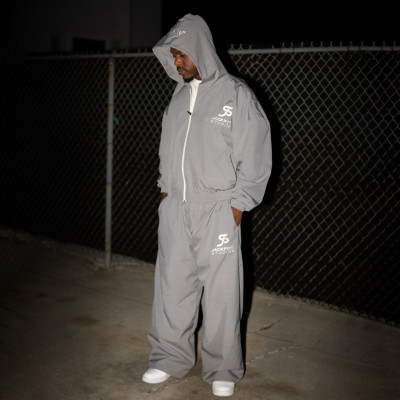
The difference between top brands and generic ones often lies in the unseen auxiliary materials.
When selecting manufacturers, many brands focus entirely on fabrics and prints while overlooking the "trims"—details like how smoothly a zipper operates, the aesthetic appeal of drawstring tips, or the paper stock used for hangtags. Yet, it is precisely these "small details" that shape a consumer's initial impression of a garment.
No matter how high-quality the fabric is, if the zipper jams after just a couple of uses, the consumer's rating will instantly plummet; conversely, even with average fabric, exquisite trims can lead consumers to feel that "this brand really puts in the effort." This article explores a few trim details common in streetwear that are easily overlooked yet have a significant impact on perceived quality.
1. Zippers: A several-fold difference in cost and a noticeable gap in tactile quality.
Zippers are among the most frequently used accessories, yet they are also the easiest place to cut costs.
Zippers generally fall into three categories:
- Standard domestic zippers: Inexpensive, but prone to snagging, paint chipping, and loose sliders.
- YKK zippers: The industry benchmark; smooth and durable, though they cost 3–5 times more than standard zippers.
- Custom zippers: Feature brand logos engraved on the slider and custom-colored tape; they offer a premium look and feel.
How do you choose? It depends on the product positioning:
- For basic jackets or hoodies, standard zippers are sufficient.
- For quality-focused streetwear brands, YKK is recommended—consumers can feel the difference the moment they use the zipper.
- For high-end items, consider custom metal zipper pulls with brand engraving—a common practice among major luxury brands.
II. Drawstrings and Webbing: A Subtle Detail at the Waist
Many people dismiss the drawstrings on sweatpants and hoodies as "just a piece of string." However, if you look closely at high-end brands, you’ll notice the details:
- The drawstrings aren't ordinary cotton cords; they are flat or round cotton cords that feel soft against the skin and don't chafe the neck.
- The aglets (tips) aren't plastic but metal (copper or iron), often engraved with the brand's initials.
- The drawstring color often contrasts with the garment (e.g., white drawstrings on a black hoodie), creating an effortless sense of design.
Don't underestimate the humble drawstring: a standard plastic tip costs mere cents, while a metal one costs a yuan or two. That small difference in cost transforms the entire garment, instantly elevating its perceived value and giving it a premium look.
3. Ribbed collar and cuffs: Three washes reveal the true quality.
Many sweatshirts lose their shape and the neckline goes slack after just a couple of washes; the issue lies in the ribbing.
Key specifications:
- Sufficient ribbing weight (typically 1x1 ribbing; heavyweight sweatshirts require heavyweight ribbing).
- Cotton-spandex blend for good elasticity and lasting shape retention.
- Neckline neither too tight (choking) nor too wide (prone to sagging after washing).
Consumers may not notice this detail at first glance, but they can certainly feel the difference after wearing the garment a couple of times.
4. Hangtags, Care Labels, and Packaging Bags: The Final Brand Impression
The brand experience truly begins the moment a consumer opens the package.
Hangtags: It’s not just about printing a logo—choices regarding paper stock (coated paper, black cardstock, or kraft paper), thickness, printing techniques (hot stamping, UV coating, or embossing), and how the cord is attached all serve as expressions of the brand. High-end brands often use multiple tags—main label, size tag, care instructions, and brand story card—layered together.
Care labels: Soft, rubber-like labels are far more comfortable than stiff, woven ones. Many major brands have already switched to "tagless" printing (printing care information directly onto the inner fabric) specifically to prevent neck irritation.
Packaging bags: A simple plastic bag printed with the brand logo might cost just a few cents more, yet it makes a world of difference to the unboxing experience.
5. Craftsmanship: Printing, embroidery, and washing treatments give the garments "soul."
Recommendations for the Brand
1. Don't skimp on the small stuff—the accessories. If the fabric for a hoodie costs 50 yuan, upgrading the zipper to YKK adds 3 yuan, adding metal tips to the drawstrings costs another yuan, and using high-quality paper for the hangtag adds 50 fen. You spend less than 5 yuan extra in total, yet the product's perceived quality jumps to a completely different level.
2. Focus on these details during the prototyping stage: Is the zipper smooth? Are the drawstring tips secure? Does the ribbing have good elasticity? Is the hangtag well-crafted? These small details are often exactly where you set yourself apart from the competition.
3. If the budget allows, opt for custom accessories. Think engraved zipper pulls, custom-colored webbing, and branded hangtags. The one-time mold costs are low, but they create strong brand recognition in the long run.